
Beyond Data Streams: Engineering the Future with AI-Enhanced Digital Twins

By: TJ McKelvey, Director of Digital Engineering, Integer Technologies
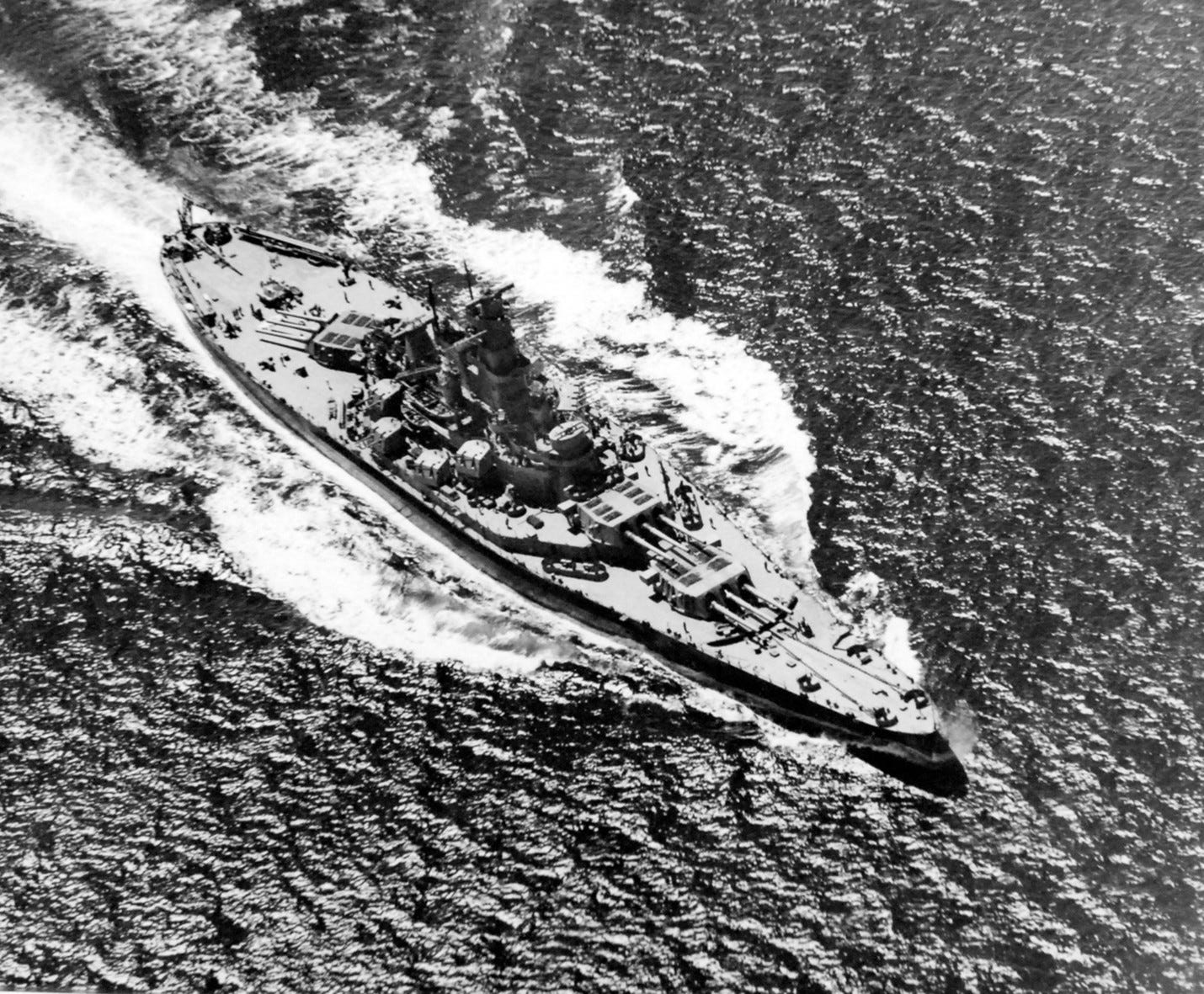
During a night engagement with the Japanese fleet on Nov. 14, 1942, the USS South Dakota sustained 26 hits in its superstructure off Savo Island at the second Battle of Guadalcanal. Much of the damage was sustained during a three-minute loss of power at the height of the battle.
The failure was primarily caused by the shock of its own guns firing, which caused a short circuit in a cable. This led to an overload that knocked out the main circuit supplying power to aft electrical loads. While “blinded” in the middle of a combat zone, the ship’s fire control, radars, and internal communications went dead. Because the crew had to manually diagnose and reset the electrical system, the ship became a sitting duck.
Three minutes may not seem like a long time, but during a battle, it’s a lifetime. During those precious seconds, the South Dakota took multiple hits from enemy fire. By the end of the engagement, 40 men were killed and 180 were wounded.
What if we could turn those minutes into milliseconds using digital twins?
In the complex world of modern defense and industrial engineering, the term digital twin is often thrown around as a buzzword for simple models used in basic data analytics – finding anomalies in data streams to predict when a system might fail. While useful, this approach is reactive; it tells you that a problem exists based on past patterns.
To truly unlock the power of digital twins — to provide critical mission assurance to our warfighters — we must start by rapidly building a physics-based model. This creates a source of truth that understands exactly how a system should behave from a physics perspective, rather than just what is normal for a data stream. And by using Reduced Order Models (ROMs)[1], complex calculations can be shaved down to run simulations thousands of times every few seconds, allowing for real-time optimization and deeper decision-making.
Simulating Thousands of Realities
Consider this future scenario: During a combat engagement in the Red Sea, large surface combatant suffers a critical fault in one of its primary gas turbine generators. Simultaneously, the commander needs to power the AN/SPY-62 [2] radar at full capacity to track an incoming drone swarm and ready its onboard directed energy (DE) laser weapon system (LWS) for defense. In a traditional ship, engineers might have to manually cross-connect buses or rely on pre-set, “one-size-fits-all” contingency plans that don’t account for the unique physics of that specific moment. Using a digital twin, built by Integer Technologies on first-principles physics, not just past data patterns, it understands the actual electrical limits of every cable and converter on that specific ship.
In the milliseconds following the power loss, the twin uses various tools — including physics-based models refined with machine learning, and other tools — to rapidly evaluate different ways to route power through the system from power sources to loads. It doesn’t just look for any solution; it looks for the best one in the context of the mission scenario, considering constraints, degradation and complex system interactions. For instance, the twin may choose to reroute around power flow paths that are electrically viable but subject to imminent overheating due to degraded or failed cooling system components serving those components.
Instead of waiting for a human to diagnose a “black box” failure, the digital twin enables a virtual feedback loop that allows the system to reconfigure itself in real-time. The crew knows exactly how far they can push the system before a permanent failure occurs, allowing them to engage the enemy with the maximum available power.
Using our mission assurance software, the battleship maintains its defensive shield and successfully engages the target because the digital twin found a physics-compliant power configuration that a standard data-driven model would never have considered.
In the case of the USS South Dakota in 1942, the power failure was a result of complex physical interactions — shock, vibration, or a single component failure cascading through a black box system. Instead of a three-minute blackout while a crew searches for a tripped breaker, a digital twin in a similar circumstance, would identify the physical event (the shock from the guns) and its electrical consequence in milliseconds, saving the ship from an extended barrage and ultimately potentially saving lives.
The utility of these digital twins extends across the DOW’s most critical assets, beyond the complex power and energy systems for U.S. Navy surface combatants. They can provide a mission management layer for UUVs and USVs, transforming autonomous platforms from simple executors into resilient, mission-aware agents; or provide a definitive command and control (C2) and decision-support layer for a shore-side commander. For high-stakes manufacturing, such as high-temperature composites for flight surfaces, the feedback loop can take years. Digital twins act as digital surrogates for parts that don’t exist yet, collapsing timelines and budgets. Physics-based models supplement this sparse data, allowing us to predict part performance and adjust to supply chain disruptions before they cause two-year delays.
The Next AI Frontier
In support of a Department of War (DOW) customer, Integer produces ship-level Integrated Power System (IPS) models of the operational expectations of a U.S. Navy surface combatant’s concept powerplants. Late last year, Integer completed the production of a complex digital twin to support this effort in 80 days, a significant milestone for our team. This process is traditionally labor-intensive, as building a system-level model is exponentially more difficult than modeling a single component for the following reasons:
Every piece of equipment added introduces numerical interactions that can cause simulations to “blow up” without careful calibration.
Deciding which aspects of system performance are critical is often as much an art form as a science, requiring high-level subject matter expertise.
When using commercial equipment, engineers often must work backward to figure out how “black box” components function before they can be modeled.
While our current successes are built on human talent — an elite modeling and simulation shop, coordinating closely with manufacturers to integrate deep electrical backgrounds with talented modeling skills — the next evolution of digital twins lies in Artificial Intelligence (AI), and a transformative future that further shrinks these timelines, turning months of labor into weeks of automated precision.
The immediate future involves AI agents acting as “co-pilots” within platforms like Simulink for model development. These agents assist engineers in real-time, assessing code and helping build simulations faster by answering technical questions as they arise.
Going further, AI allows us to treat our simulations as modular code blocks. By training AI agents on the underlying physics-based assumptions and considerations we’ve used in past domains (like naval power), the AI can help generate or modify code blocks for entirely new applications. It’s like onboarding a new employee; we give the AI the “guardrails” and physics-based realities, and it helps generate the prototype-level code for a new configuration to be submitted for validation in a fraction of the time.
We are moving toward a near-term future where AI can take a “pile of text” about a system and automatically distill requirements and system structures. While world-building (where AI understands the full context of how a system interacts with its environment) is still in the far future, the ability to automate the initial modeling of parts and their fit is becoming increasingly possible.
At Integer, our goal is to build resilience. Whether it is a ship reconfiguring its power grid under fire or a manufacturing line adapting to a sudden material shortage, digital twins provide the foresight needed to act with confidence. By integrating AI into our physics-first approach, we aren’t just making the process faster; we are ensuring that the defenders of tomorrow have the most sustainable and adaptable technology possible.
[1] Simplified, “shaved down” versions of high-fidelity, physics-based models designed to run at extreme speeds without losing the essential accuracy of the original system. While a standard high-fidelity model might provide an incredibly detailed “source of truth,” it is often too computationally “heavy” to run in real-time on a ship or a factory floor.
[2] Also known as the Air and Missile Defense Radar (AMDR), is the U.S. Navy’s next-generation integrated air and missile defense radar system. It is a multi-function Active Electronically Scanned Array (AESA) designed to simultaneously detect and track ballistic missiles, cruise missiles, hypersonic weapons, hostile aircraft, and surface ships.