
Why Digital Engineering Matters in the Future of Ship Design

By TJ McKelvey, Director of Digital Engineering, Integer Technologies
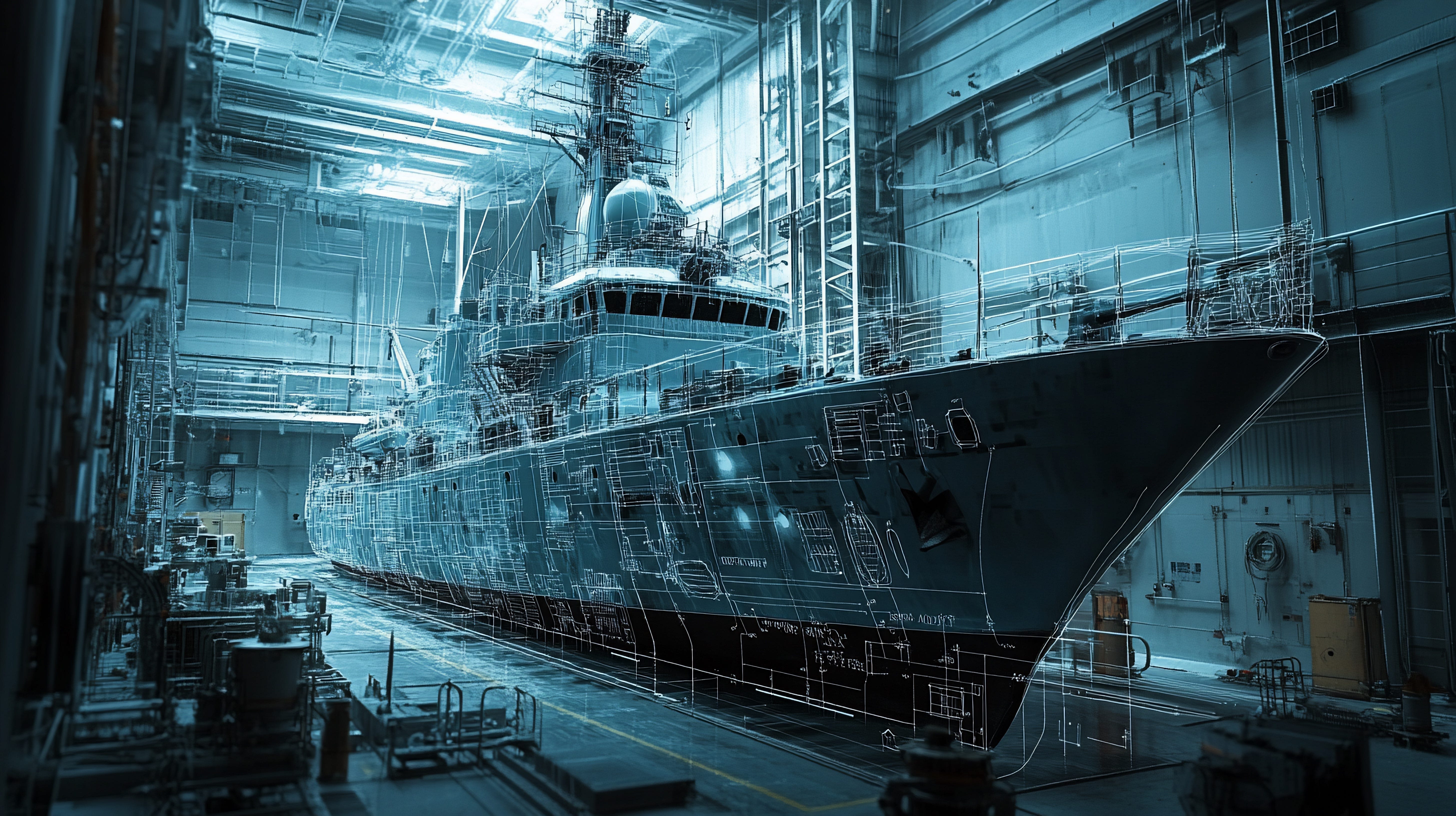
As geopolitical tensions rise and global maritime competition intensifies in the wake of Operation Epic Fury, the U.S. faces a critical inflection point in its national security. Following the joint U.S.-Israeli military action against the Iranian regime’s air and naval capabilities and the subsequent closure of the Strait of Hormuz, there is an urgent need to revitalize our domestic shipbuilding industry or risk the severe consequences of maritime vulnerability.
The U.S. has seen its capabilities erode over decades of underinvestment, outsourcing, and aging infrastructure while foreign entities of concern own a considerably larger percentage of the global maritime fighting force. To win this operational capability gambit requires ensuring fleet readiness and maritime dominance; this will, in turn, require reinvesting in ship and submarine building to keep pace with the latest technology and vault toward future innovations more quickly. Ensuring American maritime dominance is a national security priority. In an April 2025 executive order, titled “Restoring America’s Maritime Dominance,” the White House said: “Recent data shows that the United States constructs less than 1% of commercial ships globally... Rectifying these issues requires a comprehensive approach that includes… rebuilding America’s maritime manufacturing capabilities (the Maritime Industrial Base).”
The administration’s subsequent announcement late last year of the Golden Fleet marks a dramatic shift in naval strategy, prioritizing a massive shipbuilding buildup that was foreshadowed in the April 2025 EO. This includes replacing the planned DDG(X) next-generation destroyer program with the Trump-class guided-missile battleship, or BBG(X).
But how do we build the capabilities for a defense industrial base to pivot faster and achieve these goals? And how do we leverage new technologies and methods to optimize legacy processes and speed up innovation? The answer is digital engineering.
Powering the Future of Ship Design

At Integer, our digital engineering, software, manufacturing, and machinery experts are bringing advanced techniques to bear for the next generation of ship design. We’re streamlining design and manufacturing workflows while infusing new capabilities into the military maritime vessel construction industry so the U.S. can build more resilient ships faster and better.
Our software tools optimize the design and workflows by using digital engineering to enhance the manufacturing process. We build digital representations of processes and products in order to capture an enduring digital thread to be utilized throughout the manufactured product’s lifecycle. The digital twin provides a means for process parameters to be modeled in real time to adapt and ensure optimal production quality while impacts from design and material changes can be quantified and translated to broader capability effects. Additionally, our advanced physics-based modeling, hardware-in-the-loop, and digital twin capabilities allow designers to emulate the performance of shipboard systems at a speed only limited by the amount of compute available. This is changing the development and testing landscape for future naval platforms as marine engineers can now utilize digital surrogates early in the design lifecycle to identify dominant designs, reduce risk, and optimize the performance and resilience of machinery systems.
Integer has worked with Navy stakeholders to develop modeling platforms that enable the shift from traditional prototype‑heavy development and delivery to a digitally‑driven design paradigm for shipboard machinery. By embedding rigorous virtual testing early in the acquisition lifecycle, we help the Navy reduce integration risk, accelerate schedule, and preserve critical resources before physical hardware is fabricated.
The Navy’s pivot to the BBG(X) program, envisioned as a 35,000-ton behemoth equipped with hypersonic missiles, high-energy lasers, and railguns, demands tools that can predict component performance and system interactions with absolute confidence. The immense power draw and complex integration required for such a vessel means that traditional design iterations are too slow and costly.
By leveraging advanced modeling and simulation capabilities, Integer is enabling the Navy to mitigate risks associated with component performance and integration, reducing the need for costly rework and ensuring the delivery of more capable and reliable ships. Our solutions are built on a deep understanding of the complex physical and digital interactions between ship systems. Our suite leverages validated physics‑based models, modular architecture libraries, and verification workflows to deliver comprehensive digital twins of ship systems, allowing acquisition programs to explore design alternatives, assess design margins, and evaluate design decisions under realistic operating conditions while the ship’s hull and primary structures are still in concept.
Through early‑stage virtual experimentation, we provide the warfighter with actionable insight into how machinery will behave under mission loads, thereby minimizing costly redesigns and schedule slips once the hardware is built. Early adopters have reported reductions in design‑iteration cycles and a measurable decrease in non‑recurring engineering effort, positioning the Navy to meet its readiness and cost‑effectiveness goals outlined in recent strategic guidance. Late last year, Integer completed the production of a complex ship-level Integrated Power System (IPS) model to support operational expectations of a U.S. Navy surface combatant’s concept powerplants in 80 days, a significant milestone for our team.
As the Navy moves toward an expanded and more technologically advanced fleet, digital engineering will be a cornerstone in ensuring the U.S. maintains maritime dominance and equips the warfighter with resilient, mission-ready platforms for decades to come. We stand ready to partner with the Department of War program managers and acquisition teams to integrate our platform into upcoming design initiatives, conduct joint validation exercises, and support the transition to a fully model‑test‑validate workflow. Integer can directly contribute to the Navy’s mission of delivering resilient, high‑performance vessels for the warfighter of tomorrow.
The revitalization of America’s maritime industrial base is no longer just a strategic ambition; it is an immediate national security imperative. If the U.S. fails to aggressively adopt digital engineering to modernize and accelerate ship production, the nation risks permanently ceding maritime dominance to rival powers. In an increasingly volatile geopolitical landscape, relying on antiquated, legacy design processes will leave our fleets underequipped and our forces vulnerable. Embracing a digitally driven approach is the path to rapidly outfitting the warfighter of tomorrow and securing our shores for decades to come.